livestock mobile 1 DP_3525 - web.jpg

Accelerating Digital Transformation in Agriculture

Author: Sander Janssen

Publish Date: 11 October 2021


Digital technologies have strong potential to support the transformation of agriculture, building a resilient, sustainable and inclusive agrifood system [1].  As key enablers, digital innovations can play a catalytic role – especially in the wake of COVID-19 – by improving the capacity of small-scale producers (SSPs) to adapt to external shocks and increasing productivity and profitability. With more than 33 million smallholder farmers and pastoralists [2] already registered on such platforms, sub-Saharan Africa alone has seen a rapid increase in the adoption of digital solutions, recording an annual growth of 44 per cent over the three-year period ending in 2018. Despite a rapid expansion of the digitalisation for agriculture (D4Ag) sector across low-and-middle income countries, the reach and sustainable use of D4Ag solutions remains fairly low,  especially among SSPs. Only 13 per cent of smallholders in sub-Saharan Africa are registered for any digital service and far fewer are actively using such services [3]. Inadequate access to the Internet and digital services, coupled with issues of affordability, disability and a growing digital divide, are among factors that have widened the disconnect. One of the main barriers holding back investment in D4Ag solutions and their impact at scale is lack of cost-effective ways of comparing and contrasting solutions, and making informed decisions on which ones will really work.


Promoting alliances and investments

Despite a highly complex and fragmented digital sector, there is significant potential for establishing sustainable partnerships and investments. For this reason, there is a growing need for greater coordination of D4Ag solutions and their overarching ecosystem, but how best to achieve this? 

Stewart Collis from the Bill & Melinda Gates Foundation (BMGF), says that Digital Agri Hub (the Hub) can play an important role in driving D4Ag solutions for small-scale producers: “Evidence suggests bundled digital farmer services positively impact small-scale producers’ livelihoods by improving access to inputs, information on managing crops and livestock, obtaining climate mitigating finance and insurance and accessing markets. Digital Agri Hub will collate the essential data necessary to understand which combinations of services are reaching men and women small-scale producers at scale with impact, and act as a guide for investment and adoption of the most impactful digital agriculture products, solutions and services.”

Josh Woodard from The United States Agency for International Development (USAID) adds: "As the number of digital solutions in the agricultural sector continues to grow, the Digital Agri Hub will allow practitioners to make more informed decisions and bring clarity to a fragmented information landscape. We're excited by the potential for greater impact as a result of a more cohesive digital agriculture space."

Convinced of the scope for digital technologies in the agriculture sector, FCDO, BMGF and the United States Agency for International Development (USAID) are co-funding the Hub to monitor and track the development of digital for agriculture solutions, and their impact in helping to achieve a climate-resilient, sustainable and inclusive food system. Responding to the direct needs of the diverse stakeholder groups that play an active role in D4Ag will be an important focus for the Hub. To this end, it has conducted a needs assessment, with the aim of identifying, unpacking and addressing the major needs for each of the different actors on the pathway towards the sustainable growth of the sector. 


The emerging issues 

Across the nine identified stakeholder groups, made up of donors, (impact) investors, D4Ag solution providers, agri-food value chain actors, agritech companies, innovation repositories, policy makers and direct implementers (farmers’ organizations and non-governmental organisations), a broad range of issues has emerged. Tomaso Ceccarelli, the lead coordinator on this Ecosystem coordination activity from the Digital Agri Hub team, observes that: “Stakeholders have different perspectives and goals. But there is one trait that unites most of them, and this is the need for a structured overview on initiatives and reliable insights on the impact of D4Ag.” 

Gigi Gatti from Grameen Foundation USA – one of the Digital Agri Hub partners – says that: “It is essential to work with existing D4Ag networks and Communities of Practice to understand how to best connect them to the Hub.”

Responding to these diverse needs is a key success parameter for the Hub, integrating such crucial and different perspectives in its programme of work. Simona Benvenuti from the Netherlands Advisory Board on Impact Investing (NAB) – a Digital Agri Hub partner – experiences that "to accelerate the mobilization of private-sector capital into D4Ag it is critical to provide impact-based data on existing D4Ag solutions and insights to mitigate investment risk, thus facilitating collaboration amongst the different types of capital providers and knowledge exchange globally across the value chain".
 
Daniele Tricarico, from GSMA, also a Digital Agri Hub partner, has closely assessed the development of the D4Ag sector and worked with a number of different solution providers in collaboration with mobile operators.  From his perspective, "it is exciting to see a growing number of D4AG services coming to market, but this fast-paced sector also experiences a high level of fragmentation and many short-lived initiatives. It is therefore crucial to quickly identify emerging best practices and highlight the operational and business models that can support truly sustainable, scalable solutions".

Inclusion for all stands out as a critical prerequisite for the sustainable development of D4Ag. In support, Eunice Likoko, from Wageningen University and Research (WUR), adds that: “For women and marginalised groups, improved access to D4Ag solutions will be stimulated by understanding and addressing the barriers they face in accessing digital solutions. Intervention strategies need to go beyond minimal participation of excluded groups, to adopt more empowering approaches that address underlying barriers to promote sustainable and realistic adoption of digital solutions for these groups’’.  


A hub for inclusive agricultural transformation

To ensure the strong and sustainable growth of the D4Ag sector, a better tracking mechanism will be central to the success of Digital Agri Hub, while supporting the everyday decision-making process of D4Ag actors across the agrifood system. Whether the decision is to partner with another D4Ag solution provider, to invest in a D4Ag solution, to create awareness and stimulate the development of the sector in a particular country, or to invest in digital developments for societal impact, access to insights, data and knowledge is crucial. It is Digital Agri Hub’s firm intention to truly act as a hub, bringing partners together, creating capacity and connecting actors to one another, helping them to share their insights and best practices towards inclusive agricultural transformation.


_________________________________________
[1] World Bank, 2019. Future of Food: Harnessing Digital Technologies to Improve Food System Outcomes (available here).
[2] 13% of all sub-Saharan African smallholders and pastoralists and up to 45% of smallholder households, depending on assumptions used to calculate penetration.
[3] D4Ag solutions refer to the digitally enabled business models and technologies to address farmers and food system actors’ constraints (e.g. around market access, inputs, financing and climate).
Towards a Definition of Digital Agriculture Ecosystems: Structure, Actors, and Pathways in LMICs

Author: Team Digital Agri Hub

Publish date: 23 April 2026


The idea of digitalisation for the agriculture ecosystem has emerged gradually, not as a single innovation, but as the result of decades of technological, institutional, and organisational change in agriculture. What began as the mechanisation of farming has evolved into a complex, interconnected system in which data, technologies, and actors continuously interact across the entire agri-food value chain. In its earliest phase, digitalisation in agriculture was, on the one hand, occurring at a territorial, aggregate level, with the use above all of satellite information for monitoring, early warning and forecasting purposes. On the other hand, it has been closely tied to efficiency gains at the farm level through mechanisation, irrigation systems, and later GPS-enabled machinery. This has evolved into precision agriculture, where sensors, satellites, and geospatial tools enable more targeted and data-informed decision-making. Yet these innovations largely remained confined to individual farms or specific technologies.

The real transformation began when agriculture started to be understood as part of a broader digital ecosystem. In this perspective, digitalisation is no longer about isolated tools, but about integrating technologies, data flows, and stakeholders into a dynamic, interconnected system. Today, the “digital agriculture ecosystem” refers to a socio-technical network in which farmers, agribusinesses, governments, researchers, and technology providers are - at least in principle - connected through digital infrastructures and platforms. Data becomes the central resource, continuously generated, shared, and analysed to inform decisions across multiple levels of the system.

Within this evolving landscape, international organisations such as the Food and Agriculture Organisation of the United Nations (FAO), the World Bank (WB) and the Technical Centre for Agricultural and Rural Cooperation ACP-EU (CTA) have played a foundational role in shaping both the narrative and the practice of digital agriculture. They have emphasised its potential to address global challenges such as food security, climate change, rural poverty and inclusion. Similarly, the OECD has contributed to defining the policy and governance dimensions of digital ecosystems, particularly around data sharing, interoperability and sovereignty.

Governments and regional institutions, including the European Commission, have further driven this transformation by investing in digital infrastructure, enabling regulatory frameworks, and embedding digitalisation into agricultural and rural development strategies. At the same time, the private sector, ranging from agritech startups to large multinational companies, has developed platforms, advisory services, and digital marketplaces that increasingly structure how agricultural value chains operate.

However, the ecosystem perspective becomes especially critical when considering low- and middle-income countries (LMICs). In these contexts, agriculture is often dominated by Small-Scale Producers (SSPs), and the conditions for digitalisation differ significantly from those in high-income countries. Challenges such as limited connectivity, lower levels of digital literacy, fragmented markets, and constrained access to finance shape how digital ecosystems can emerge and function.

Rather than replicating models from more industrialised settings, digitalisation in LMICs has followed more leapfrogging and hybrid pathways. Digital solutions on mobile devices, for example, have played a transformative role, enabling farmers to access weather forecasts, market prices, financial services, and advisory support without the need for advanced infrastructure. In many cases, intermediaries, such as cooperatives, extension agents, or local service providers, act as crucial bridges between digital systems and farmers, ensuring that even those without direct access to technology can benefit.

In these environments, international development actors and donors have been particularly influential. Programmes supported by the World Bank and implemented in collaboration with governments and local partners have sought to build digital agriculture innovation ecosystems combining infrastructure investments, capacity building, and policy support. Other actors and initiatives also play a critical role in shaping the ecosystem. The Digital Impact Alliance, in partnership with FAO and ITU, fosters collaboration among public and private actors, facilitating knowledge sharing and the scaling of digital innovations, particularly in low- and middle-income countries. Briter provides research and mapping of agritech startups and innovations, helping stakeholders understand trends and identify gaps. Mercy Corps Agrifin supports financial inclusion and digital solutions for smallholders, demonstrating how digital platforms can integrate financial and agricultural services. These actors complement national and global initiatives by linking innovation, financing, and collaboration.

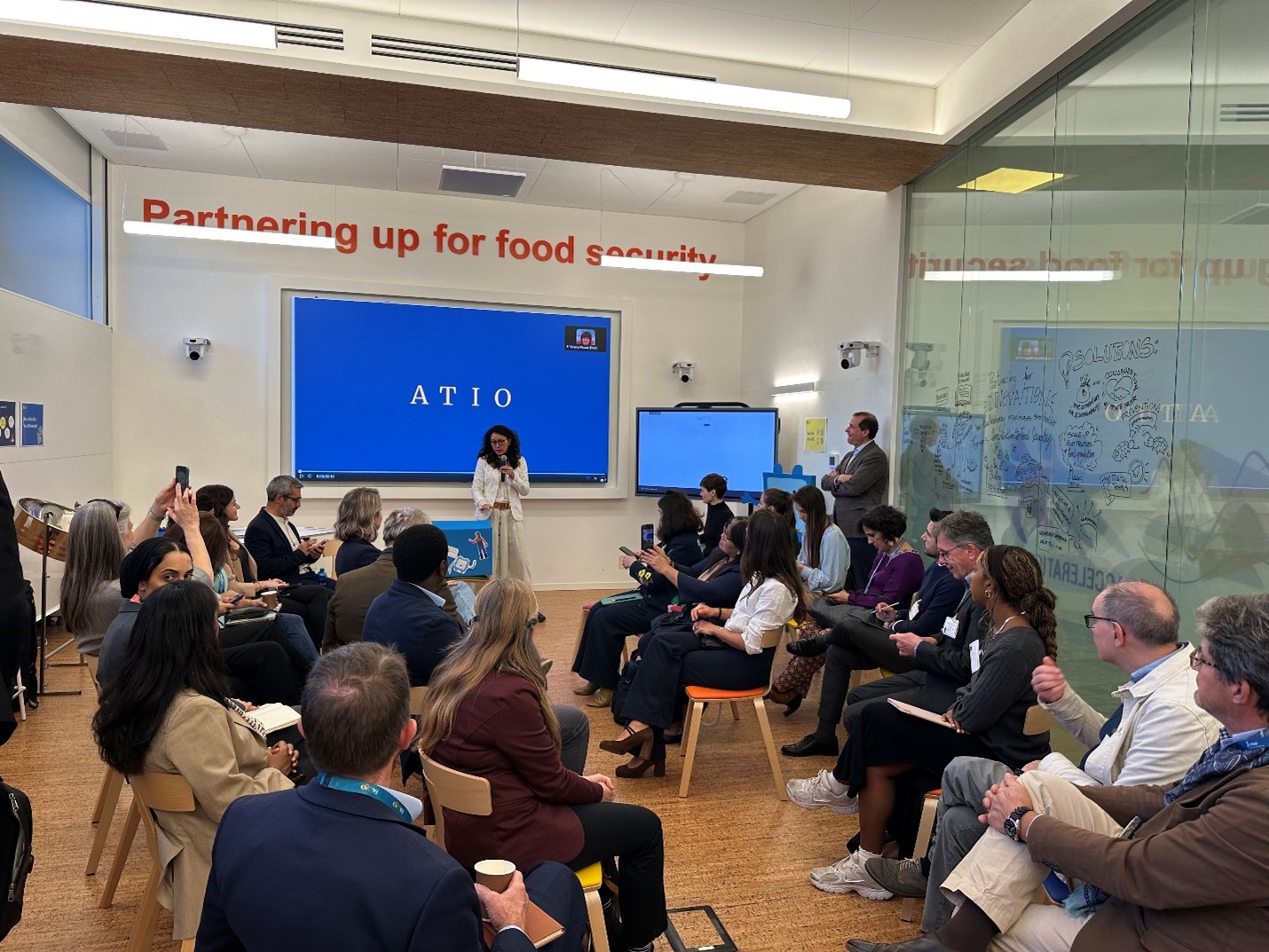
Within this framework, National Agricultural Digitalisation Initiatives (NAgDI), spearheaded by the Commonwealth Secretariat, play a pivotal role. NAgDI address fragmentation by providing a shared national vision, aligning technology adoption with policies, rural development, and digital economy goals. They coordinate diverse actors, foster collaboration, encourage interoperability, and strengthen the enabling environment: digital infrastructure, governance, and capacity building. In LMICs, NAgDI are crucial for inclusion, ensuring smallholders, women, and remote communities can access digital solutions, often through intermediaries. They also facilitate the scaling of innovations, connecting pilots to national systems for sustainable impact. In this sense, NAgDI, where deployed, acts as an ecosystem orchestrator at the national level, ensuring that the different components of digitalisation—technologies, data systems, institutions, and actors - are aligned and mutually reinforcing. It is within these contexts that platforms such as the Digital Agri Hub  and the FAO Agrifood Systems Technologies and Innovations Outlook (ATIO) Knowledge Base (KB), now part of the broader FAO Science, Technology and Innovation (STI) Portal,  become particularly relevant. The Digital Agri Hub – this year celebrating its fifth anniversary - exemplifies a shift from documenting isolated deployments of digital solutions to ecosystem-building approaches, especially in LMICs. The Hub, as a curated data repository, a knowledge base and data discovery facility, provides community and ecosystem support and advisory services in the domain of digitalisation for agriculture, with a special focus on small-scale producers in LMICs. The Hub reaches out to agriculture value chain actors and nurtures the digitalisation of the agriculture ecosystem via its D4Ag community of practice, an electronic knowledge network accounting for 2000+ members worldwide. By bringing together governments, private sector actors, researchers, and development partners, it facilitates the sharing of digital solutions and knowledge tools tailored to diverse local realities. Importantly, it showcases digital solutions that are not only technologically viable but also socially and economically inclusive.

The ATIO Knowledge Base is a comprehensive, open-access platform designed to support policymakers, investors, researchers, innovation users, and innovators in making informed decisions to accelerate the transformation of agrifood systems. Powered by AI and enriched through partnerships (Digital Agri Hub is a core partner on the digital solutions component), the ATIO KB bridges grassroots innovations with mainstream innovations.

The experience of LMICs also highlights critical challenges within digital agriculture ecosystems. Issues of data ownership, privacy, and governance are often less regulated, raising concerns about unequal power dynamics between global technology providers and local stakeholders. At the same time, the risk of exclusion - where smallholders, women, or remote communities are left behind - remains significant if digitalisation is not accompanied by deliberate inclusion strategies.

Despite these challenges, LMICs are also spaces of innovation and experimentation. Many successful digital agriculture models, particularly those based on mobile platforms, bundled services, and public-private partnerships, have originated or been refined in these geographies. This underscores an important point: digital agriculture ecosystems are not simply transferred from one context to another; they are co-evolved systems, shaped by local needs, capacities, and institutional environments.

Ultimately, the concept of digitalisation for the agricultural ecosystem implies that transformation in agriculture is not driven by technology alone. It emerges from the interaction between technologies, actors, institutions, and data systems, all embedded within specific socio-economic contexts. In low- and middle-income countries, this interaction is particularly complex, but also particularly important, as digitalisation holds the potential not only to increase productivity, but to enhance resilience, inclusion, and sustainable development.

In this sense, digital agriculture is best understood not as a fixed model, but as an ongoing, adaptive process, a continuously evolving ecosystem shaped by global agendas, local innovation, and the collective efforts of its many stakeholders.