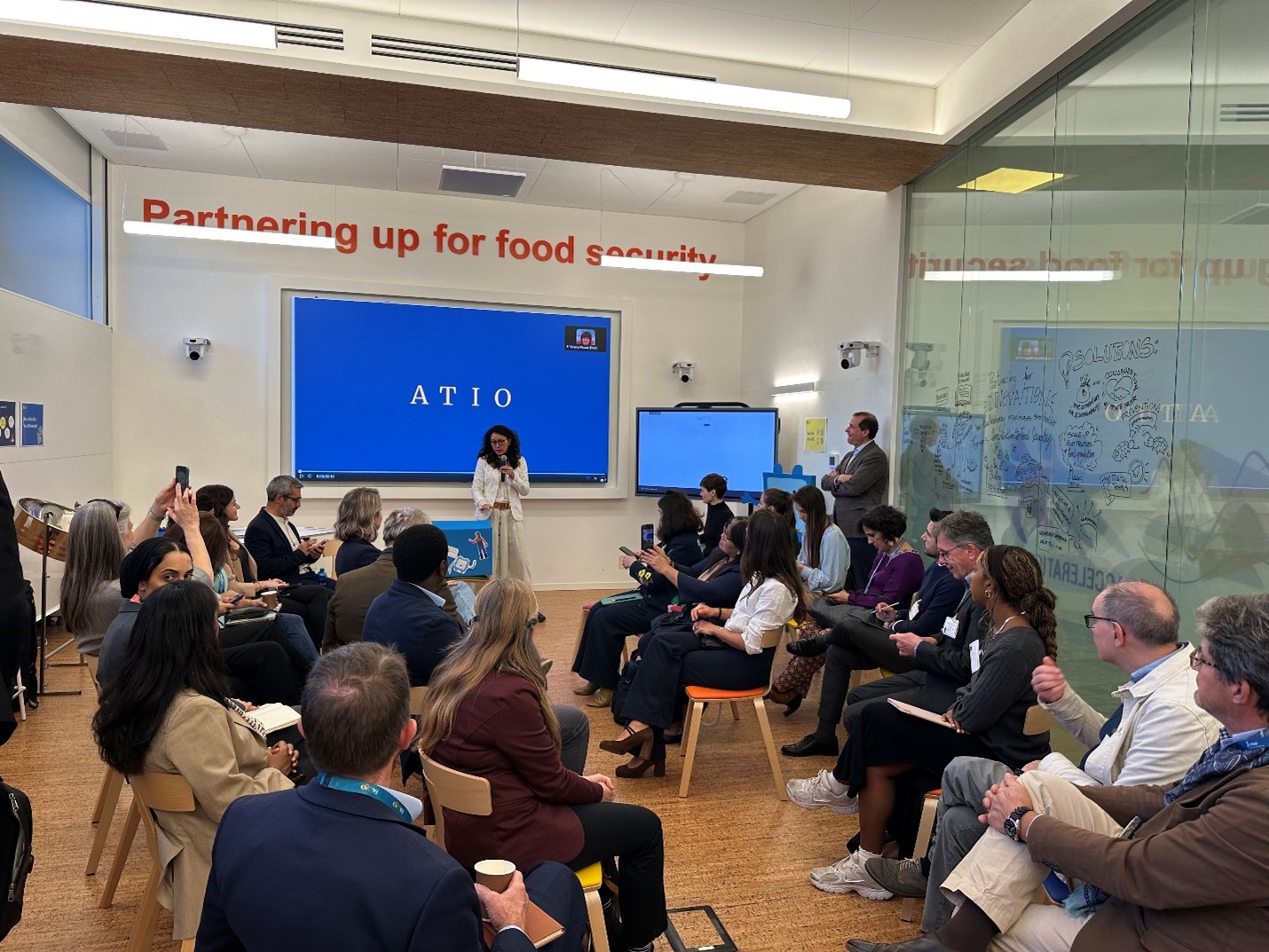
livestock mobile 1 DP_3525 - web.jpg

Accelerating Digital Transformation in Agriculture

Author: Sander Janssen

Publish Date: 11 October 2021


Digital technologies have strong potential to support the transformation of agriculture, building a resilient, sustainable and inclusive agrifood system [1].  As key enablers, digital innovations can play a catalytic role – especially in the wake of COVID-19 – by improving the capacity of small-scale producers (SSPs) to adapt to external shocks and increasing productivity and profitability. With more than 33 million smallholder farmers and pastoralists [2] already registered on such platforms, sub-Saharan Africa alone has seen a rapid increase in the adoption of digital solutions, recording an annual growth of 44 per cent over the three-year period ending in 2018. Despite a rapid expansion of the digitalisation for agriculture (D4Ag) sector across low-and-middle income countries, the reach and sustainable use of D4Ag solutions remains fairly low,  especially among SSPs. Only 13 per cent of smallholders in sub-Saharan Africa are registered for any digital service and far fewer are actively using such services [3]. Inadequate access to the Internet and digital services, coupled with issues of affordability, disability and a growing digital divide, are among factors that have widened the disconnect. One of the main barriers holding back investment in D4Ag solutions and their impact at scale is lack of cost-effective ways of comparing and contrasting solutions, and making informed decisions on which ones will really work.


Promoting alliances and investments

Despite a highly complex and fragmented digital sector, there is significant potential for establishing sustainable partnerships and investments. For this reason, there is a growing need for greater coordination of D4Ag solutions and their overarching ecosystem, but how best to achieve this? 

Stewart Collis from the Bill & Melinda Gates Foundation (BMGF), says that Digital Agri Hub (the Hub) can play an important role in driving D4Ag solutions for small-scale producers: “Evidence suggests bundled digital farmer services positively impact small-scale producers’ livelihoods by improving access to inputs, information on managing crops and livestock, obtaining climate mitigating finance and insurance and accessing markets. Digital Agri Hub will collate the essential data necessary to understand which combinations of services are reaching men and women small-scale producers at scale with impact, and act as a guide for investment and adoption of the most impactful digital agriculture products, solutions and services.”

Josh Woodard from The United States Agency for International Development (USAID) adds: "As the number of digital solutions in the agricultural sector continues to grow, the Digital Agri Hub will allow practitioners to make more informed decisions and bring clarity to a fragmented information landscape. We're excited by the potential for greater impact as a result of a more cohesive digital agriculture space."

Convinced of the scope for digital technologies in the agriculture sector, FCDO, BMGF and the United States Agency for International Development (USAID) are co-funding the Hub to monitor and track the development of digital for agriculture solutions, and their impact in helping to achieve a climate-resilient, sustainable and inclusive food system. Responding to the direct needs of the diverse stakeholder groups that play an active role in D4Ag will be an important focus for the Hub. To this end, it has conducted a needs assessment, with the aim of identifying, unpacking and addressing the major needs for each of the different actors on the pathway towards the sustainable growth of the sector. 


The emerging issues 

Across the nine identified stakeholder groups, made up of donors, (impact) investors, D4Ag solution providers, agri-food value chain actors, agritech companies, innovation repositories, policy makers and direct implementers (farmers’ organizations and non-governmental organisations), a broad range of issues has emerged. Tomaso Ceccarelli, the lead coordinator on this Ecosystem coordination activity from the Digital Agri Hub team, observes that: “Stakeholders have different perspectives and goals. But there is one trait that unites most of them, and this is the need for a structured overview on initiatives and reliable insights on the impact of D4Ag.” 

Gigi Gatti from Grameen Foundation USA – one of the Digital Agri Hub partners – says that: “It is essential to work with existing D4Ag networks and Communities of Practice to understand how to best connect them to the Hub.”

Responding to these diverse needs is a key success parameter for the Hub, integrating such crucial and different perspectives in its programme of work. Simona Benvenuti from the Netherlands Advisory Board on Impact Investing (NAB) – a Digital Agri Hub partner – experiences that "to accelerate the mobilization of private-sector capital into D4Ag it is critical to provide impact-based data on existing D4Ag solutions and insights to mitigate investment risk, thus facilitating collaboration amongst the different types of capital providers and knowledge exchange globally across the value chain".
 
Daniele Tricarico, from GSMA, also a Digital Agri Hub partner, has closely assessed the development of the D4Ag sector and worked with a number of different solution providers in collaboration with mobile operators.  From his perspective, "it is exciting to see a growing number of D4AG services coming to market, but this fast-paced sector also experiences a high level of fragmentation and many short-lived initiatives. It is therefore crucial to quickly identify emerging best practices and highlight the operational and business models that can support truly sustainable, scalable solutions".

Inclusion for all stands out as a critical prerequisite for the sustainable development of D4Ag. In support, Eunice Likoko, from Wageningen University and Research (WUR), adds that: “For women and marginalised groups, improved access to D4Ag solutions will be stimulated by understanding and addressing the barriers they face in accessing digital solutions. Intervention strategies need to go beyond minimal participation of excluded groups, to adopt more empowering approaches that address underlying barriers to promote sustainable and realistic adoption of digital solutions for these groups’’.  


A hub for inclusive agricultural transformation

To ensure the strong and sustainable growth of the D4Ag sector, a better tracking mechanism will be central to the success of Digital Agri Hub, while supporting the everyday decision-making process of D4Ag actors across the agrifood system. Whether the decision is to partner with another D4Ag solution provider, to invest in a D4Ag solution, to create awareness and stimulate the development of the sector in a particular country, or to invest in digital developments for societal impact, access to insights, data and knowledge is crucial. It is Digital Agri Hub’s firm intention to truly act as a hub, bringing partners together, creating capacity and connecting actors to one another, helping them to share their insights and best practices towards inclusive agricultural transformation.


_________________________________________
[1] World Bank, 2019. Future of Food: Harnessing Digital Technologies to Improve Food System Outcomes (available here).
[2] 13% of all sub-Saharan African smallholders and pastoralists and up to 45% of smallholder households, depending on assumptions used to calculate penetration.
[3] D4Ag solutions refer to the digitally enabled business models and technologies to address farmers and food system actors’ constraints (e.g. around market access, inputs, financing and climate).
Where are we at with digitalization for agriculture in Latin America and the Caribbean?

Caption

Author: Tomaso Ceccarelli

Publish date: 02 October 2025


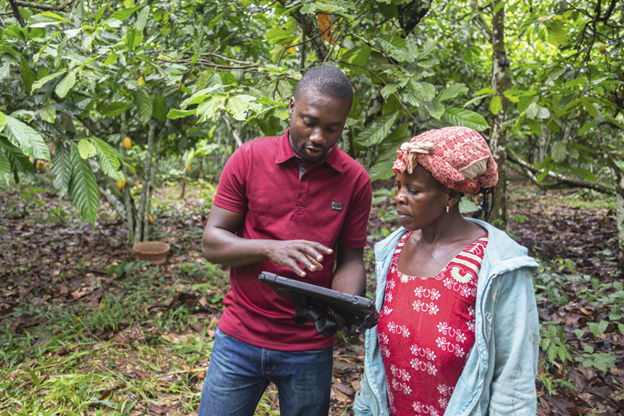
The just-concluded Semana de la Agricultura Digital (Digital Agriculture Week) hosted by IICA (Instituto Interamericano de Cooperación para la Agricultura) and partners in San José, Costa Rica, offered a useful “compass” for where the region’s agri-digital journey is heading. Now in its fourth edition, the “Semana” keeps growing in scale and substance, drawing together the people who drive the agricultural digital innovation ecosystem across the Americas, including public agencies, researchers, farmer organizations, agtech founders, investors, and development partners. It has become an effective occasion for knowledge and experience exchange, as well as for fostering connections among key actors in the region’s ecosystem.  

The program offered a blend of keynote presentations, showcases of digital solutions, and case studies from both the public and private sectors (mostly represented by agtechs selected through the event's competition), as well as panels and breakout discussions on specific topics, networking activities, and parallel events (namely the meeting of national agricultural research institutes, the INIAs and the meeting of the Agtech network of the Americas). It is increasingly the region’s annual pulse check. 

That pulse is stronger than it was just a few years ago. When the Digital Agri Hub ran a regional launch event roughly three years back, the landscape looked advanced in pockets but fragmented overall, with limited collaboration between actors, sparse policy coordination, and little international exchange beyond Spanish-speaking ties. The event has become one of the places where that fragmentation is being addressed with intent. IICA deserves real credit for filling this gap, supporting newly emerging service providers, facilitating matchmaking, and encouraging collaboration across borders and sectors. At the same time, the event helps governments, farmers’ organisations, researchers, investors, and donors clearly articulate their needs and grasp the sector’s innovations. 

In this context, IICA invited me to share perspectives on the AKIS (acronym for Agricultural Knowledge and Innovation System) in the European Union, on how it is currently being promoted within the new Common Agricultural Policy (CAP,) and in connection to both advisory services, agricultural research, and digitalisation in Europe in general.  More precisely, on how “macro-AKIS”, i.e. platforms (technical and institutional) operating at the national level and with national stakeholders, should be linked to “micro-AKIS” (how information on possible innovations is shared at the individual farm level, mainly informally among peers) and “meso-AKIS”, where intermediaries such as cooperatives, consultancy services, and retail can operate as agents of knowledge and innovation transfer.  

What I saw in San José suggests the region is on a fast-paced, promising growth. I am referring, for example, to the application of AI-assisted satellite imagery classification for monitoring irrigation, providing farm advisory, and so on. Many of the solutions I have seen presented rival those currently offered in the European or African context. In the latter case, this has occurred particularly in sectors where international cooperation has invested heavily through multilateral or bilateral public organizations, as well as impact investors and philanthropic entities.  

The energy I have observed in the many, mostly very young and highly trained, service is encouraging and important, because often momentum precedes systemic changes. 

But it's not all rosy. IICA’s mapping of national ecosystems reveals persistent fragmentation and weak policy coordination, reflecting a sector still feeling its way through a somewhat chaotic start.  

Rewarding innovative startups in San José showcased a vast pool of talent, which speaks to the region’s growth potential. However, the experience of other regions is instructive: startups cannot thrive without the support of the whole ecosystem. Otherwise, they risk finding themselves in a vicious circle we've already seen: a series of pilot projects, but ultimately too many promising initiatives that disappear before generating lasting value. 

I think of governments that must implement enabling policies; of investors who must be able to understand, based on objective metrics, the actual characteristics and strengths of the proposed solutions. I think of farmers' associations who also need to navigate a market that is still often opaque, and who can actually become a valuable ally of the solutions providers themselves: to co-develop solutions that serve the farmers and are not simply "parachuted" by yet another technological hype. 

So what’s next? AKIS may hold the key. Properly adapted to Latin America and the Caribbean, national and subnational AKIS platforms can unite research centers, solution providers, farmers and their organisations, investors, and policymakers to craft realistic policies and roadmaps tailored to the region's diverse realities. As one of the most brilliant Agtech solution providers I have spoken with told me, it's not about pursuing the Silicon Valley model here; it wouldn't work. It's about finding a suitable path, one that takes into account the existing diversities across countries in terms of agro-ecological contexts, forms of agriculture (for their production orientation and their commercial, emerging, or subsistence nature), and the different levels of technological and institutional “digital readiness”. 

A legitimate question is whether AKIS can exist without a clear political commitment to coordination between different countries. In the medium term, certainly not. But in the short term, embryonic AKIS can still be formed with whoever is willing to contribute. Think of them as coalitions of the ready, which can also serve as constructive pressure groups, helping governments see both the urgency and the upside. 

As another participant explained to me, governments are already exposed, or soon will be, to the tumultuous process of digitalization in agriculture. The illuminating example of Peru was cited, where the EUDR, the European regulation on deforestation (although currently being "slowed down" by the European Commission itself), by requiring the creation of digital farm registries for production traceability, forces" the relevant agencies to move in this direction. Because of EUDR,  government organisations now realize the need to create such registries, and by doing so start appreciating the advantages of digitalization.  

They do it for themselves, to reduce costs, and as a building block for many impactful applications in the agricultural sector. And they do it to respond to farmers, who often come to them saying: “We are doing our part to produce in a sustainable way and document that we are not cutting down the forest, now you should do yours". When the “give-and-get” is visible (share data, receive better services), adoption accelerates. 

So what should happen next? IICA, with a series of “Digital Agriculture Days” carried out before the Pan-American event, strengthened country-level networks of digital ecosystem actors.  The INIAs have in place collaborative research efforts. IICA launched and continues to support the network of agtech solution providers. 

So why not think about building a sort of embryo of AKIS with the interested parties and in the countries that are willing to do so? If not already, I expect governments will join soon.  

The “Semana” made one thing unmistakable: the ingredients are on the table, from capable providers, engaged researchers, active farmer groups, and policymakers who see both the risks of inaction and the benefits of coordination. The task now is to connect those ingredients through AKIS-based platforms that turn one-off successes into systemic transformations. 

Latin America and the Caribbean have the compass now and should continue to use it.